Gustave Doré · Esther 6:11
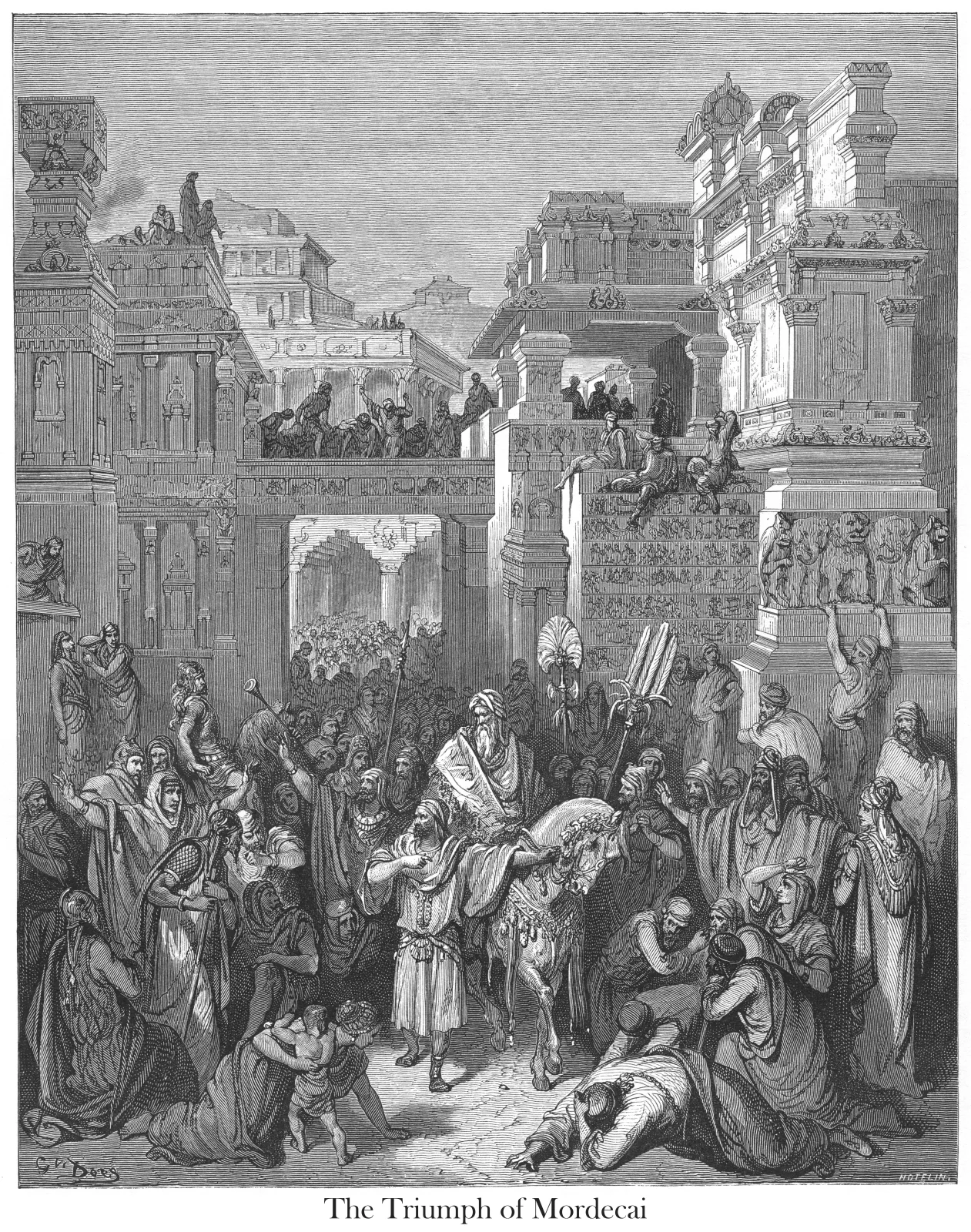
The Triumph of Mordecai
Esther 6:11 · World English Bible (Catholic)
11So Haman took the robe and the horse, dressed Mordecai, mounted him on the horse, and went through the streets of the city, proclaiming, “This is what will be done for every man whom the king wishes to honor.”
In the foreground, a man lies face down. Behind him, the richly caparisoned horse advances through the narrow passage the crowd leaves for it. Mordecai, seated high up, wears a loose, light-colored garment; in front of him, a man on foot turns toward the people and extends his arm toward the mount. The procession draws near, but its way remains crowded with bodies prostrate, kneeling, or bent toward it.
Yet the scene spills beyond this constricted passage. Figures look on from the terraces and the gallery that crosses the street; beneath the arch, the crowd stretches into the distance. The honor paid to a single man thus takes on the scale of the city. The monumental façades frame the procession without overwhelming it: their upper storeys offer as many places from which to watch.
The Book of Esther gives this display a tension that ceremony alone would not suffice to reveal. It is Haman who has been ordered to clothe Mordecai and lead him through the city, proclaiming the honor the king wishes to bestow. The man on foot in front of the horse can be identified as Haman on the basis of the text: his gesture directs the crowd’s gaze toward the one he is to honor. The engraving cannot, however, make his cry heard. It gives that cry a visible force in the crowd’s attitudes, where the verse does not describe their reaction.
After the procession, Mordecai returns to the king’s gate; Haman, for his part, goes home in grief, with his head covered. Both departures remain outside the frame. The engraving suspends the narrative at the moment when a dignity publicly bestowed is conveyed through another man’s words and service. In this reversal, the honor granted to the Jew Mordecai does not come from his putting himself forward: it is bestowed on him, then proclaimed before all.