Gustave Doré · Judges 11:34
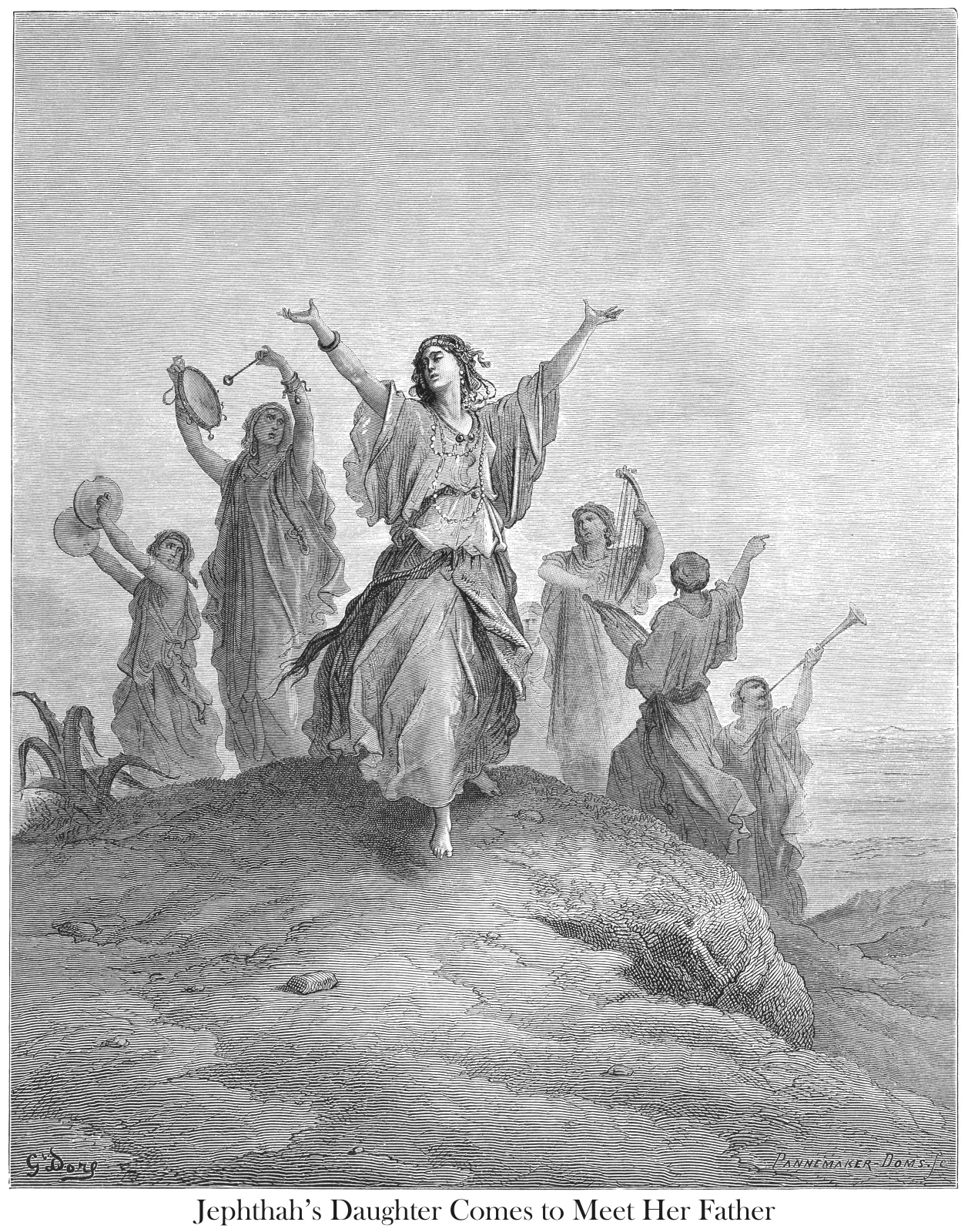
Jephthah's Daughter Comes to Meet Her Father
Judges 11:34 · World English Bible (Catholic)
34Jephthah came to Mizpah to his house; and behold, his daughter came out to meet him with tambourines and with dances. She was his only child. Besides her he had neither son nor daughter.
With her arms raised, Jephthah’s daughter advances on a rise. One bare foot appears beneath the fold of her robe; behind her, female musicians lift their instruments. The tambourine brandished on the left echoes the young woman’s gesture, while on the right a harpist and a horn player extend the procession. Everything seems borne forward.
But the one who is to receive this welcome remains outside the frame. Below the group, the ground occupies a large part of the engraving: no father there responds to his daughter’s movement. Yet the title gives this advance a direction. The meeting is announced, but is not yet visible. The gaze can then return to the young woman, isolated at the front despite the figures accompanying her.
In the Book of Judges, she comes out to meet Jephthah with tambourines and dancing, after his victory over the Ammonites. The text immediately specifies that she is his only child. This detail gives particular weight to the place the engraving makes for her: the procession is numerous, but a single figure advances at its head, arms open.
The immediate sequel changes the import of this welcome. On seeing his daughter, Jephthah tears his clothes and speaks of a vow made to Yahweh, which he says he cannot take back. The engraving stops before this gesture and before this exchange. It lets the celebration continue, even as the adjacent text gives voice to the father’s distress. The vow made to God, whose content is not specified in the lines provided, thus weighs upon a gesture that, on its own, seems wholly devoted to the joy of return.