Gustave Doré · Exodus 7:10
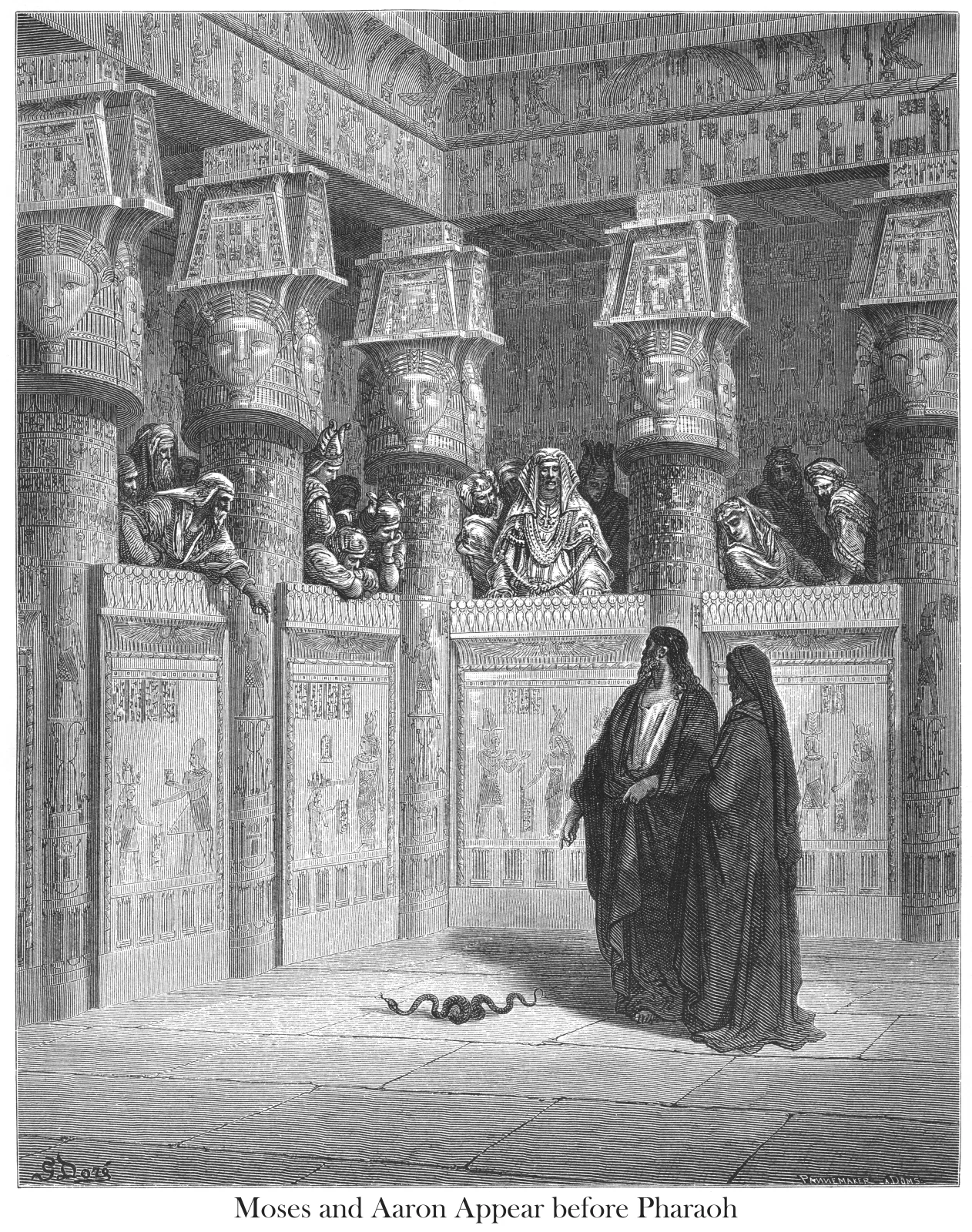
Moses and Aaron Appear before Pharaoh
Exodus 7:10 · World English Bible (Catholic)
10Moses and Aaron went in to Pharaoh, and they did so, as the LORD had commanded. Aaron cast down his rod before Pharaoh and before his servants, and it became a serpent.
On the pavement, the serpent occupies little space. Its body undulates in an open area, some distance from the two men standing upright. Higher up, a figure leaning on the balustrade extends a hand toward it. This gesture crosses the divide between the court gathered above and the visitors received below: it points to the tiny spot where attention is concentrated.
Moses and Aaron face Pharaoh, who stands at the centre of the gallery. Several figures around him lean forward or look toward the floor. The columns laden with figures, the walls covered with signs, and the great sculpted faces form a monumental setting. Yet this decor does not reduce the serpent to a mere detail: the empty space around it sets it apart, while the gazes and the gesture directed downward give it importance.
The Book of Exodus attributes a specific action to Aaron: he casts his staff down before Pharaoh and his servants, and the staff becomes a serpent. The engraving captures the moment when the animal is already there. The gesture that made it appear belongs to the text; here, it is the serpent’s presence on the ground that confronts the court. Nothing makes it possible to determine with certainty which of the two men is Aaron.
What follows in the passage complicates the trial: the magicians of Egypt also produce serpents, before Aaron’s staff swallows theirs. Doré leaves this second moment outside the frame. Before the single serpent, the court remains assembled, and the outcome of the confrontation is not yet visible. The sign given at Yahweh’s command first presents itself to Pharaoh’s gaze as a question posed in the very midst of his palace.