Gustave Doré · Revelation 18:2
Babylon Has Fallen
Revelation 18:2 · World English Bible (Catholic)
2He cried with a mighty voice, saying, “Fallen, fallen is Babylon the great, and she has become a habitation of demons, a prison of every unclean spirit, and a prison of every unclean and hated bird!
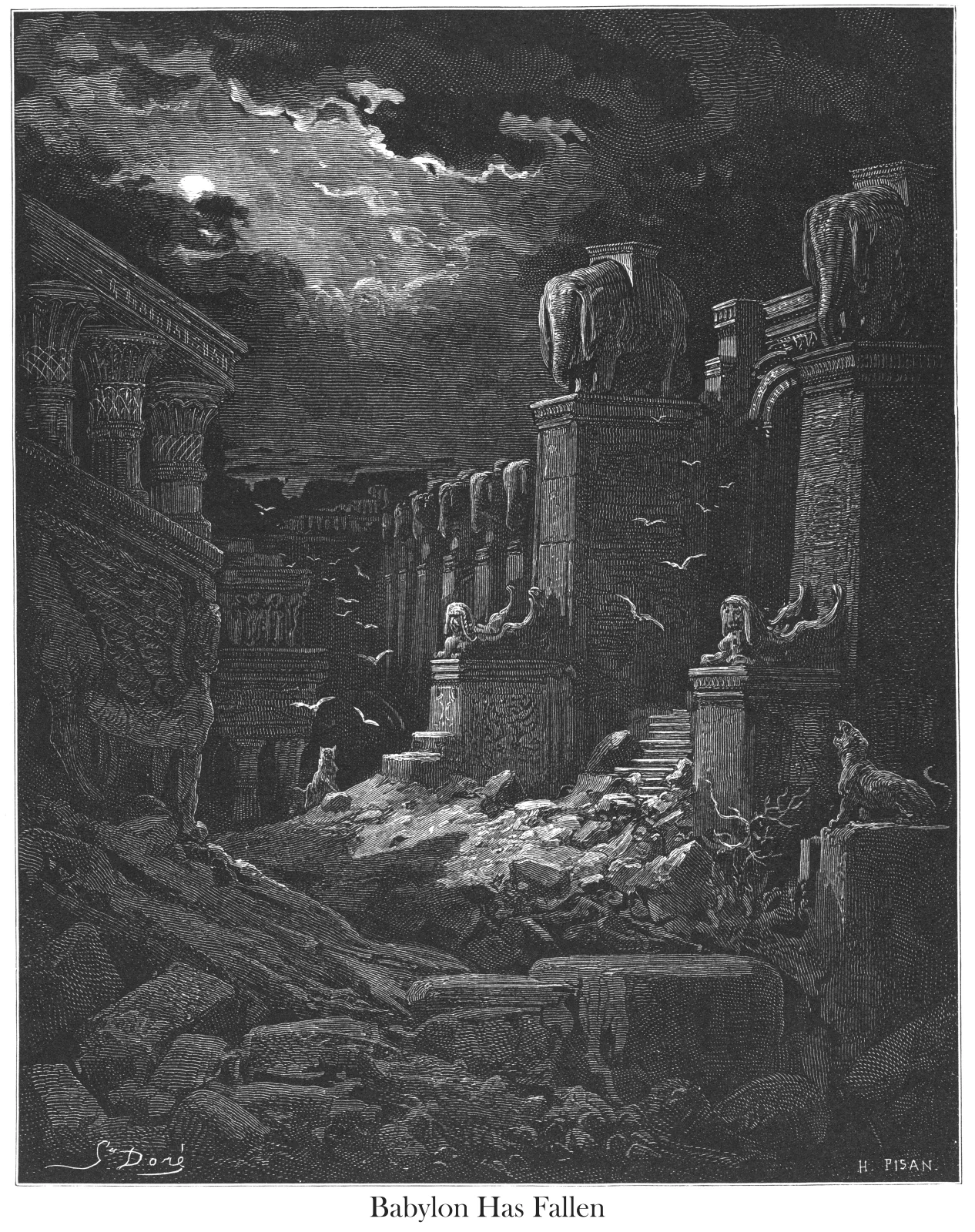
Birds cross the open space between the monuments. Their small, pale silhouettes stand out against the dark façades; they give a sense of the city’s vastness and are almost the only things to animate it. Lower down, animals occupy the stones among the rubble. No inhabitant is in sight.
Yet Babylon has not disappeared. On the right, sculpted elephants still tower above their high pedestals; a staircase rises between two monumental figures. On the left, columns and part of a structure remain. The rubble blocking the foreground makes these remains difficult to reach. The fall foretold in Revelation is therefore not equated here with the erasure of the city: its grandeur still stands in places, but access to its buildings is obstructed, and birds move about where one would expect to find men.
The angel’s cry declares that Babylon has fallen and become the dwelling place of demons, unclean spirits, and unclean birds. Doré depicts the latter without giving identifiable form to the spiritual beings. He also leaves out of the frame the angel proclaiming the news. The powerful words of the text give way to a city surrendered to its new occupants. The sky, brightened near the clouds, looms over the ruins, but no heavenly figure can be made out there.
The biblical context links Babylon’s power to the luxury that enriched the merchants and seduced the nations. The engraving’s monuments give visible weight to this past grandeur, without depicting either trade or kings. Their persistence makes the sentence more troubling: what was once powerful remains recognizable after its fall. The birds do not erase the architecture; they now inhabit it.