Gustave Doré · John 19:15
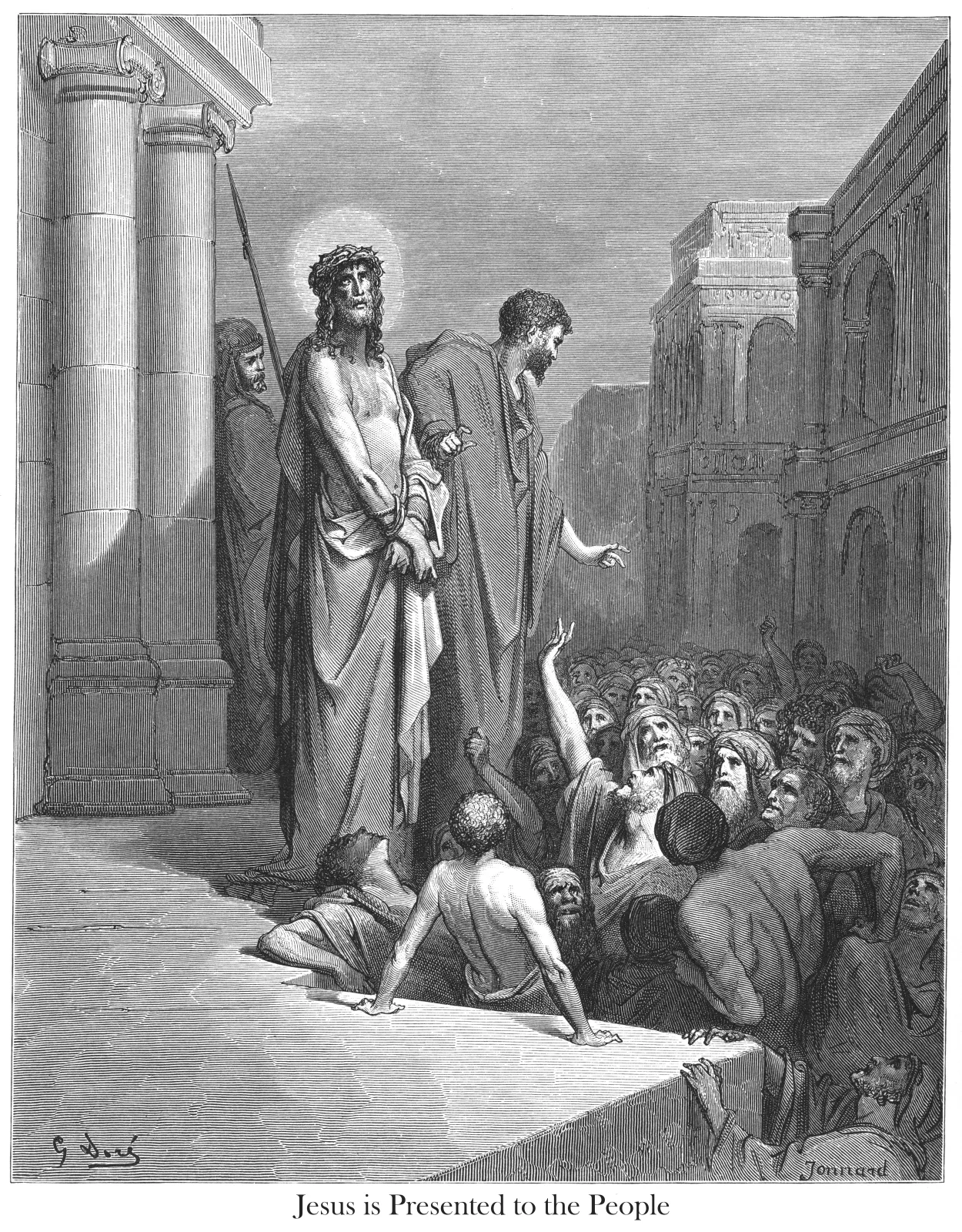
Jesus Is Presented to the People
John 19:15 · World English Bible (Catholic)
15They cried out, “Away with him! Away with him! Crucify him!” Pilate said to them, “Shall I crucify your King?” The chief priests answered, “We have no king but Caesar!”
A hand rises from the crowd toward the platform. Higher up, Pilate’s hand reaches out in its direction. Between the two gestures lies an empty interval: no contact is made, yet the looks and arms carry the exchange from one level to the other. Pilate leans forward; below him, faces turn toward the platform, while other figures press against its edge.
Beside the governor, Jesus stands upright, his hands bound in front of him. His head, crowned with thorns, stands out against a round patch of light. He takes no part in the exchange of gestures. His elevated position makes him visible to all, but also exposes him to those demanding his death. In the foreground, a man seen from behind braces himself with both hands on the ledge: his body conveys the height of the platform and the crowd’s physical closeness.
In John’s Gospel, Pilate has just presented Jesus with the words: “Here is your King.” In response to the cries demanding crucifixion, he asks a question about this king; the chief priests then declare that they have no king but Caesar. The engraving gives form to this exchange without fixing its words. Open mouths and raised arms make the shouting palpable, but do not allow us to distinguish the leaders’ response from that of the other people present.
The crown of thorns, the bonds, and Jesus’ position give particular weight to the word “king” spoken by Pilate. The one presented to the crowd bears the marks of mockery and constraint, while Caesar’s name, in the priests’ response, denotes the power to which they profess allegiance. The engraving leaves Jesus at the center of this confrontation without giving him a commanding gesture: his kingship remains to be read in the very figure of the man handed over.