Gustave Doré · Genesis 24:16
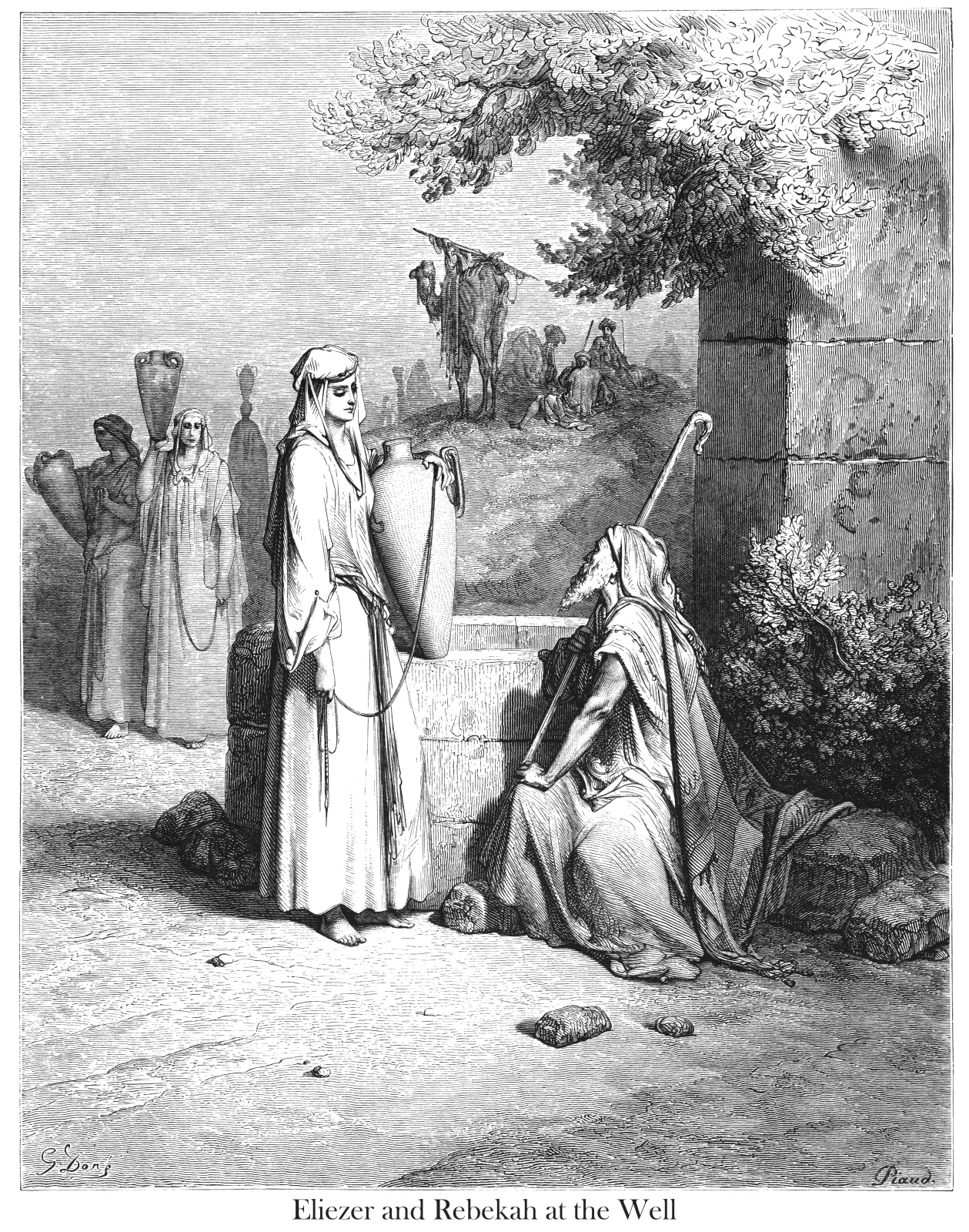
Eliezer and Rebekah at the Well
Genesis 24:16 · World English Bible (Catholic)
16The young lady was very beautiful to look at, a virgin. No man had known her. She went down to the spring, filled her pitcher, and came up.
The pitcher is still upright, set at the edge of the well. Rebekah rests one hand on it; with the other, she holds the rope, which hangs in a broad loop before her dress. Not a single stream of water yet passes from the vessel to the man seated beside her. Yet their eyes meet: the servant raises his head, while the young woman inclines hers toward him.
This pause lends weight to a gesture not yet completed. In Genesis 24, the servant has asked for a sign: that the young woman he approaches should give him a drink and also offer to water his camels. In the background of the engraving, one of the animals stands out against the sky, above the group accompanying the traveler. Its distant presence links the conversation at the well to the broader request made in the prayer. But the camels are not drinking; Rebekah’s answer remains outside the image.
The chosen verse first lingers on the young woman’s beauty and virginity, then on her journey: she goes down to the spring, fills her pitcher, and comes back up. The engraving gives her a calm, clear silhouette, without seeking to make visible what the text says of her virginity. Above all, it places the servant near her, though he does not run to meet her as he will in the following verse: he is seated, with his long staff beside him. The spring in the story takes the form here of a stone well.
Other women carrying vessels pass behind Rebekah. She is therefore not cut off from the ordinary activity of the place; yet in the foreground, her pitcher and the face turned toward her bring the movement to a halt. The sign awaited in the prayer must take shape in a free and concrete act. At this moment, it remains to be recognized.