Gustave Doré · Genesis 12:1
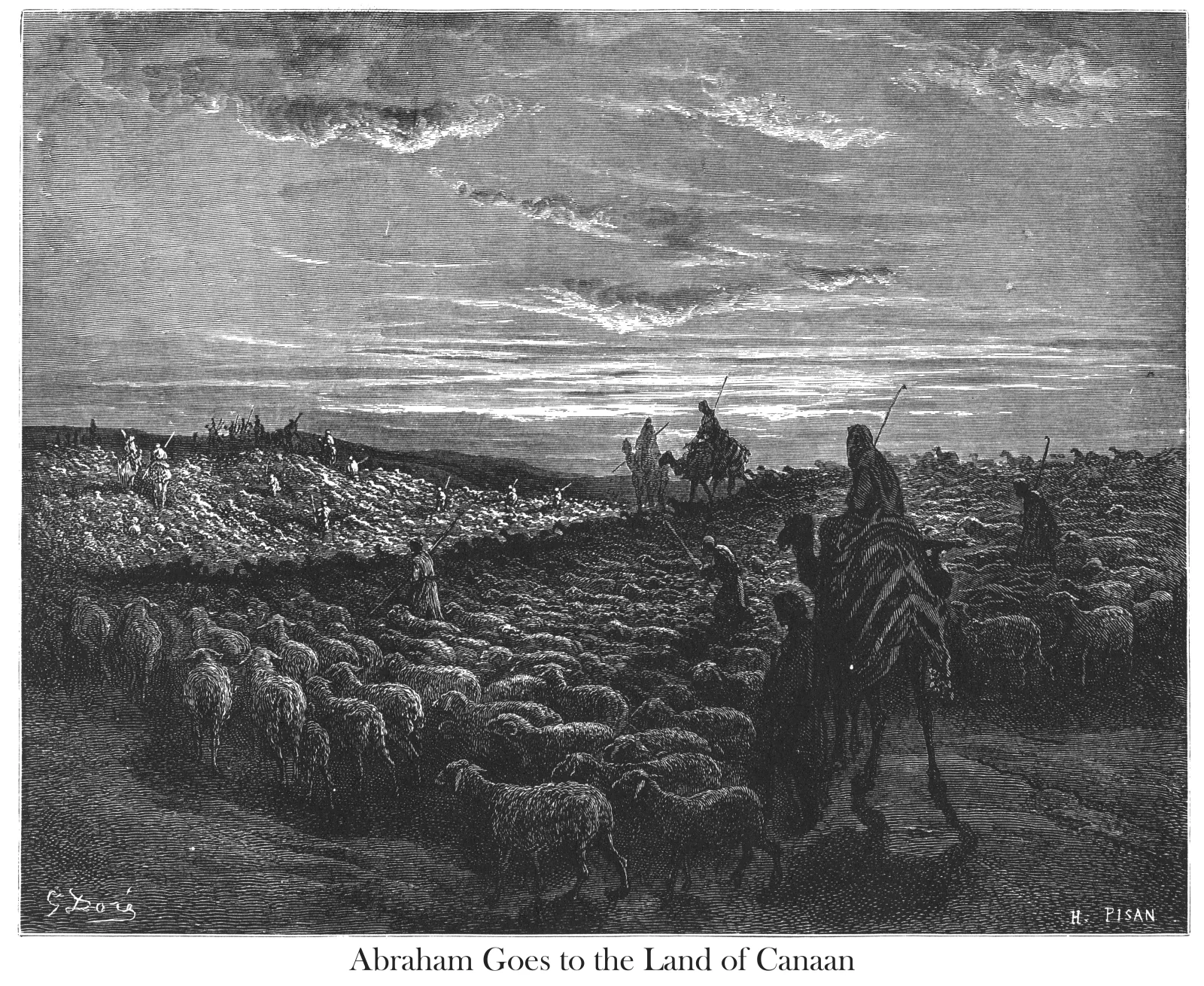
Abraham Goes to the Land of Canaan
Genesis 12:1 · World English Bible (Catholic)
1Now the LORD said to Abram, “Leave your country, and your relatives, and your father’s house, and go to the land that I will show you.
In the foreground, the sheep occupy almost the entire width of the engraving. Their closely packed backs lead the eye toward smaller figures scattered across the slopes. On the right, a mounted figure, seen from behind, towers over the flock without separating himself from it: his dark silhouette mingles with the mass of animals.
Farther away, other mounts and their riders stand out against the light band of the horizon. No gesture identifies with certainty the one who might be Abram. The title gives a name to the journey, but the engraving first shows a multitude on the move. Between the dense foreground and the distant figures, the distance traveled is measured by the very dispersal of the procession. The immense sky offers no sign by which the end of the road might be recognized.
In the verse from Genesis, Yahweh speaks to Abram and commands him to leave his country, his family, and his father’s house for a land that He will show him. The engraving depicts neither this utterance nor the moment when it is received. It presents what follows in visible form: men and beasts embarked on a journey. The title names Canaan, whereas in the order recounted, the land has yet to be shown.
This discrepancy gives the horizon its weight. The light spreading there does not reveal a recognizable destination; it merely sets the travelers apart against the distance. The promise, in the following verses, foretells a great nation and a blessing for all the families of the earth. Here, the flock’s multitude is not enough to make this promise visible. Rather, it lends substance to the departure: the call addressed to one man opens a road on which other lives are already present.