Gustave Doré · Luke 24:26-27
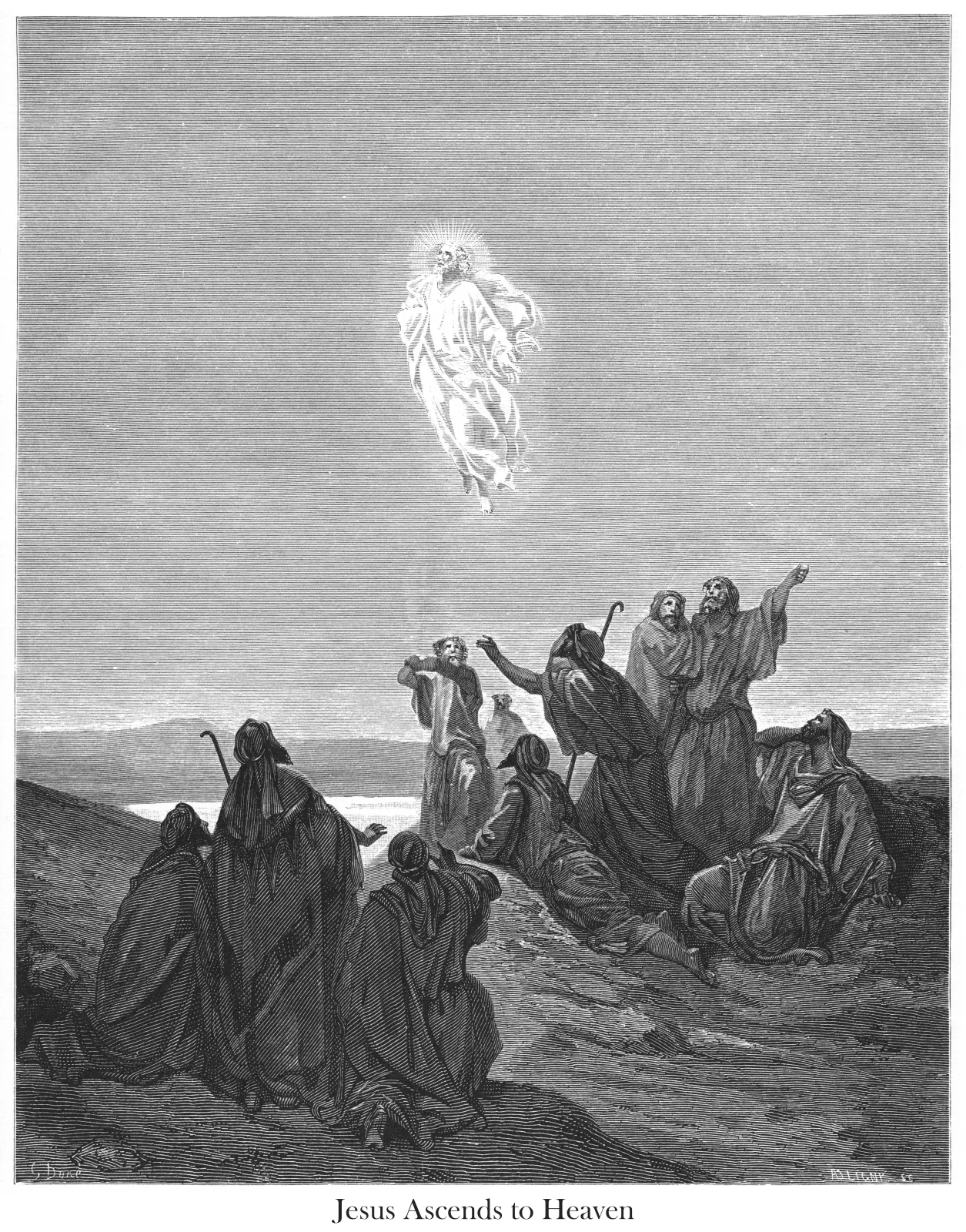
Jesus Ascends to Heaven
Luke 24:26-27 · World English Bible (Catholic)
26Didn’t the Christ have to suffer these things and to enter into his glory?”
27Beginning from Moses and from all the prophets, he explained to them in all the Scriptures the things concerning himself.
Jesus’s feet have left the ground. Beneath his luminous figure, a vast empty space separates him from the group gathered on the height. A standing man raises his arm; others remain on their knees or lean back to look. Their bodies occupy almost the entire width of the foreground, while Christ appears alone in the expanse of the sky.
This distance gives the engraving its tension. Yet it does not erase the bond between the figures: their gazes rise toward the same point, and the gesture of the man on the right extends Jesus’s upward movement. At the center, an outstretched hand stops well short of the ascending figure. The light folds of his garment stand out against the sky’s fine horizontal lines; below, dark garments and the sloping ground hold the group to the earth.
The catalogue title here identifies Jesus’s ascent to heaven. Yet the supplied verses from Luke place Jesus with his companions on the road to a village. He speaks to them of Christ’s suffering and his entry into glory, then explains what concerns him in the Scriptures, from Moses and the prophets onward. The engraving shows neither this journey nor this teaching: it presents another moment. The associated reference therefore calls for verification.
An association around the word “glory” remains possible, provided the two scenes are not confused. In Luke, Jesus leads his companions to understand the Scriptures and the necessity of his sufferings. In the engraving, no words are visible; height and light give form to the ascent, while the witnesses remain on earth. The void between them and Jesus makes palpable the separation that the supplied text, at this point, does not recount.