Gustave Doré · 2 Samuel 21:9-10
Rizpah’s Vigil over the Dead
2 Samuel 21:9-10 · World English Bible (Catholic)
9He delivered them into the hands of the Gibeonites; and they hanged them on the mountain before the LORD, and all seven of them fell together. They were put to death in the days of harvest, in the first days, at the beginning of barley harvest.
10Rizpah the daughter of Aiah took sackcloth and spread it for herself on the rock, from the beginning of harvest until water poured on them from the sky. She allowed neither the birds of the sky to rest on them by day, nor the animals of the field by night.
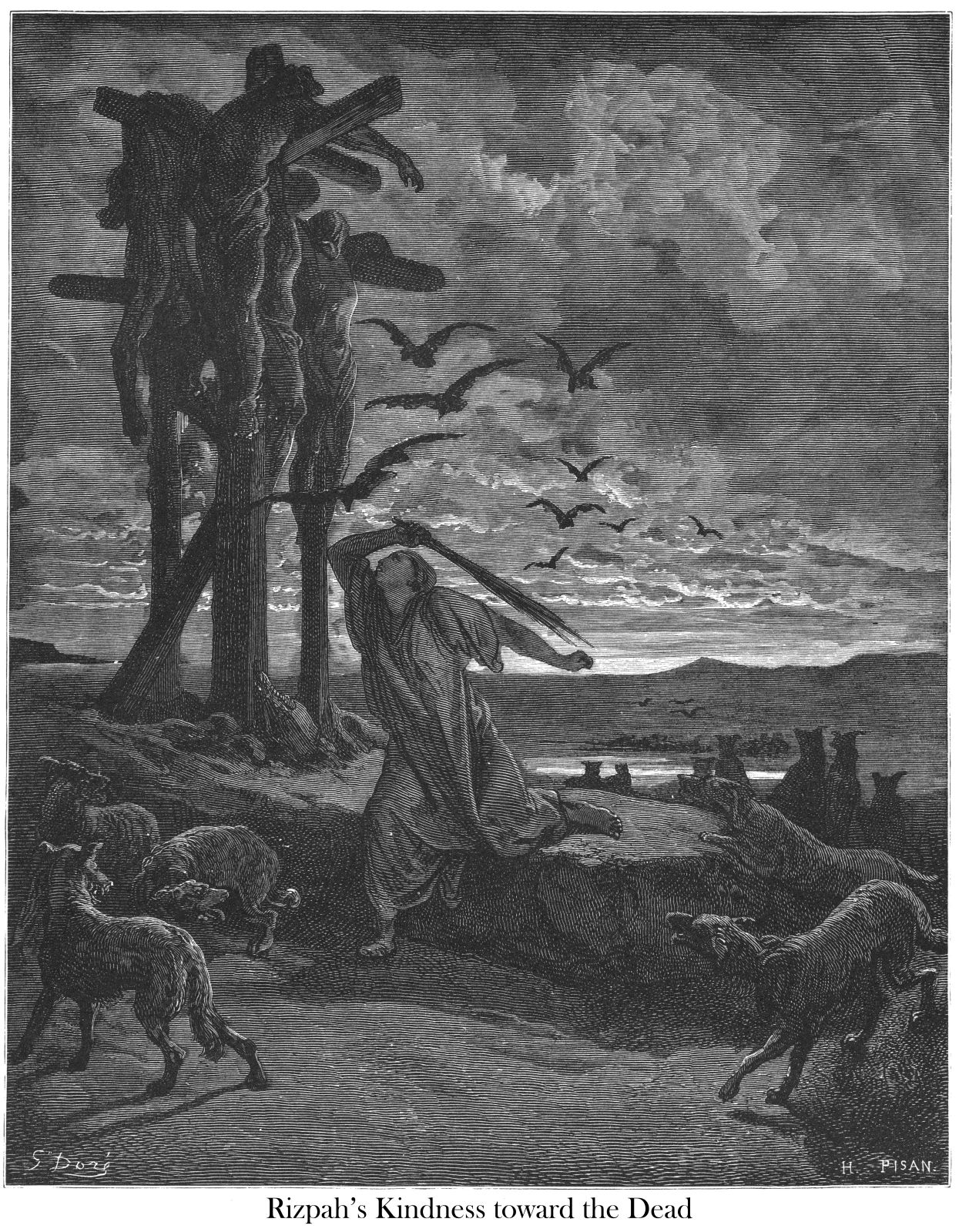
Rizpah raises one arm above her head. In her hand, a long strap extends the gesture toward the beasts approaching on the right; others are already prowling on the other side. The woman stands amid their circle, at the foot of the suspended bodies. Her posture gives the vigil the shape of an effort: she must constantly drive away what keeps returning.
Above her, the birds converge on the dead. Their silhouettes cross the sky as far as the poles laden with bodies, a dark mass dominating the left side of the engraving. Rizpah cannot shield with her own body those she watches over. Yet she occupies the space between them and the beasts, the only human presence standing in this open place.
The book of Samuel gives this vigil a duration that the engraving condenses into a gesture. Rizpah spreads sackcloth over the rock at the beginning of the harvest and remains there until the rain comes. She drives away the birds by day and the beasts of the field by night. In Doré’s image, the two threats appear together: flight in the sky and animals on the ground make palpable a vigilance that, in the text, spans the alternation of day and night.
The seven dead were handed over to the Gibeonites and hanged on the mountain. Two were Rizpah’s sons; the other five also belonged to the line of Saul. The passage records no words from the woman. Her gesture protects the bodies without undoing the violence inflicted on them. The engraving lets that violence weigh above her, while giving central place to the care she still shows them. Before these exposed dead, fidelity takes the precarious form of a presence keeping vigil.